

Dry Eye Syndrome Treatment Market to Expand at 7.1% CAGR Through 2032, Says Persistence Market Research
dry eye syndrome treatment market
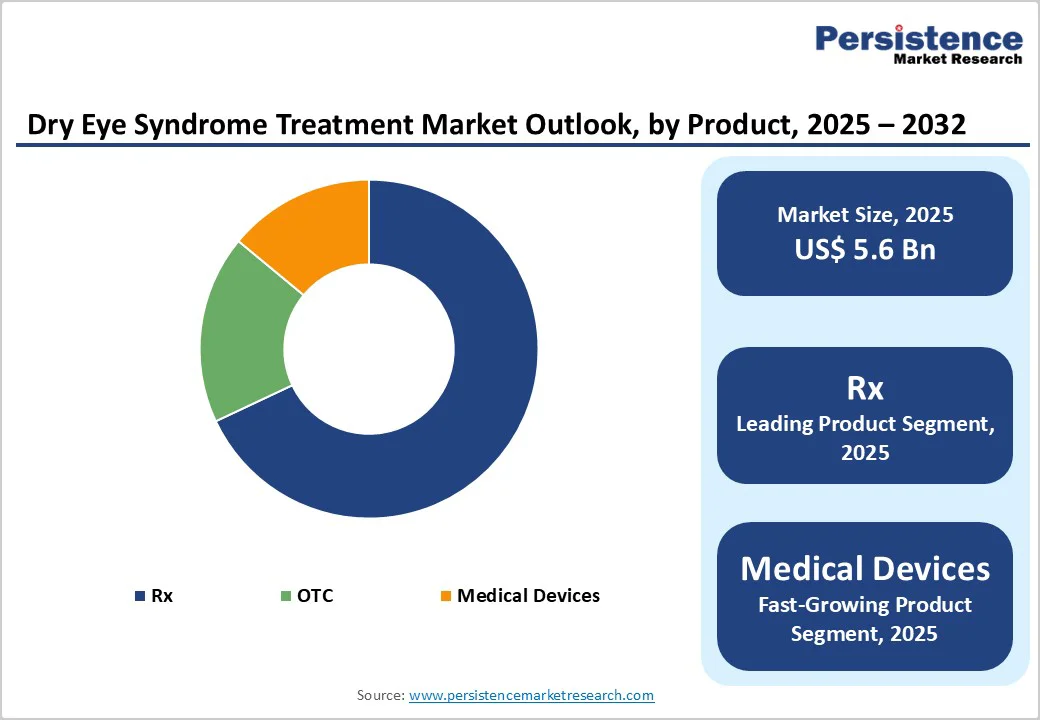
LONDON, UNITED KINGDOM, February 4, 2026 /EINPresswire.com/ -- The global dry eye syndrome treatment market is experiencing notable growth, with projections indicating a rise from a market value of US$ 5.6 billion in 2025 to US$ 9.1 billion by 2032. This represents a compound annual growth rate (CAGR) of 7.1% from 2025 to 2032. Dry eye syndrome (DES) occurs due to a lack of lubrication and tear formation on the eye surface, resulting in discomfort, irritation, and inflammation. Several treatment options are available, ranging from oral medications and topical solutions to surgical procedures.
Download Your Free Sample & Explore Key Insights: https://www.persistencemarketresearch.com/samples/32300
Understanding Dry Eye Syndrome and Market Drivers
Dry eye disease is a multifactorial condition that causes an imbalance in the tear film and ocular surface, leading to symptoms such as irritation, dryness, and blurred vision. It is estimated that between 5% to 50% of people worldwide suffer from this condition, with prevalence varying based on diagnostic criteria, demographics, and geography.
The growth of the dry eye treatment market can be attributed to various factors, such as an increase in the number of LASIK surgeries, ongoing advancements in research and development (R&D), and a growing number of drug candidates for DES. According to recent findings by NVISION, LASIK remains one of the most widely performed vision correction procedures, with around 800,000 surgeries conducted annually in the U.S. However, a significant number of patients experience dry eye symptoms post-LASIK, leading to sustained demand for therapeutic solutions.
Challenges and Market Restraints
Despite this growth, the market faces certain challenges. One significant barrier to growth is the lack of public awareness surrounding dry eye symptoms, particularly in emerging economies. Many individuals misinterpret dry eye symptoms such as irritation, burning, or blurred vision as temporary issues and do not seek medical advice in a timely manner. This delay in diagnosis hinders market expansion, as many patients resort to home remedies that do not address the root cause of the condition. Furthermore, inconsistent diagnostic practices across healthcare settings exacerbate the problem, especially in primary care facilities.
Opportunities in Over-the-Counter (OTC) Treatments
A growing opportunity in the dry eye treatment market lies in the expansion of over-the-counter (OTC) treatments. More consumers are turning to artificial tears, lubricating gels, and nutritional supplements for self-managed relief from dry eye symptoms. The increasing availability of these products through pharmacies, optical shops, and online platforms is driving market growth. Manufacturers are capitalizing on this trend through targeted education campaigns aimed at boosting awareness and encouraging the use of OTC solutions.
For example, Alcon and Bausch + Lomb have launched digital awareness programs to help consumers identify early signs of dry eye and promote the use of OTC lubricants for routine relief. These initiatives have proven effective in raising awareness and increasing the uptake of preventive care. As e-commerce platforms and pharmacy networks expand, particularly in emerging regions, the demand for OTC products is expected to rise, leading to sustained growth in the market.
Get Custom Insights Designed for Your Business: https://www.persistencemarketresearch.com/request-customization/32300
Category-wise Market Analysis
By product type, artificial tears dominate the market, holding nearly 60% of the total market share in 2025. These products are widely available, affordable, and offer quick relief from dry eye symptoms. Various formulations, including preservative-free, gel-based, lipid-based, and nanoemulsion solutions, cater to different patient needs, further enhancing their popularity. The growing use of artificial tears for chronic conditions like digital screen fatigue and contact-lens-related dryness further supports this segment's dominance.
Prescription treatments, which account for 68% of the market, are crucial for managing moderate to severe cases of dry eye. Medications such as cyclosporine, lifitegrast, and corticosteroids help address inflammation and gland dysfunction, providing long-term relief. The medical device segment, however, is the fastest-growing, driven by advancements in technologies like thermal pulsation devices, Intense Pulsed Light (IPL) therapy, and meibomian gland heating systems. These devices offer more durable relief, particularly for patients with meibomian gland dysfunction.
Regional Insights: North America and Asia Pacific
North America continues to lead the dry eye syndrome treatment market, supported by advanced healthcare infrastructure, high levels of awareness, and a strong base of ophthalmologists. The region’s aging population, coupled with the widespread use of digital devices and exposure to environmental irritants, contributes to a high incidence of dry eye. The U.S., in particular, accounts for over 80% of the North American market in 2025. The FDA’s support for faster approval of innovative treatments ensures that the market remains dynamic and responsive to emerging needs.
Asia Pacific is emerging as the fastest-growing region, fueled by rapid urbanization, lifestyle changes, and increased exposure to environmental pollutants. The rising use of digital devices, combined with improving access to healthcare, is driving demand for dry eye treatments. Countries like China and India are witnessing a surge in cases, particularly due to growing screen time and work-related stress. India, with its large population and expanding middle class, presents significant opportunities for market expansion.
Checkout Now & Download Complete Market Report: https://www.persistencemarketresearch.com/checkout/32300
Market Segmentation
By Product
Cyclosporine
Topical Corticosteroids
Artificial Tears
Punctal Plugs
Removable
Dissolvable
Omega Supplements
Others
By Application
Rx
OTC
Medical Devices
By Distribution Channel
Hospital Pharmacies
Eye Health Clinics
Retail Pharmacies
By Region
North America
Europe
East Asia
South Asia and Oceania
Latin America
Middle East and Africa
Competitive Landscape
Key players in the dry eye syndrome treatment market are focused on expanding their product portfolios through R&D and strategic partnerships. Companies like Allergan, Novartis, and Santen are continually advancing their offerings, while smaller firms seek collaborations to increase their market presence. Recent regulatory approvals, such as Aldeyra Therapeutics’ ocular reproxalap in July 2025 and Alcon's TRYPTYR in May 2025, reflect the dynamic nature of the market.
Read Related Reports:
Medical Wellness Market: The global medical wellness market is valued at US$1.8B in 2025 and expected to reach US$3.7B by 2032, expanding at a CAGR of 10.6% from 2025 to 2032.
Rare Disease Treatment Market: The global rare disease treatment market is valued at US$239.3B in 2025 and projected to reach US$490.6B by 2032, growing at a CAGR of 10.8%.
Persistence Market Research
Persistence Market Research Pvt Ltd
+1 646-878-6329
email us here
Visit us on social media:
LinkedIn
Instagram
Facebook
YouTube
X
Legal Disclaimer:
EIN Presswire provides this news content "as is" without warranty of any kind. We do not accept any responsibility or liability for the accuracy, content, images, videos, licenses, completeness, legality, or reliability of the information contained in this article. If you have any complaints or copyright issues related to this article, kindly contact the author above.
