

Railway HVAC System Market to Reach US$ 10.1 Billion by 2033, Growing at a 4.5% CAGR | Persistence Market Research
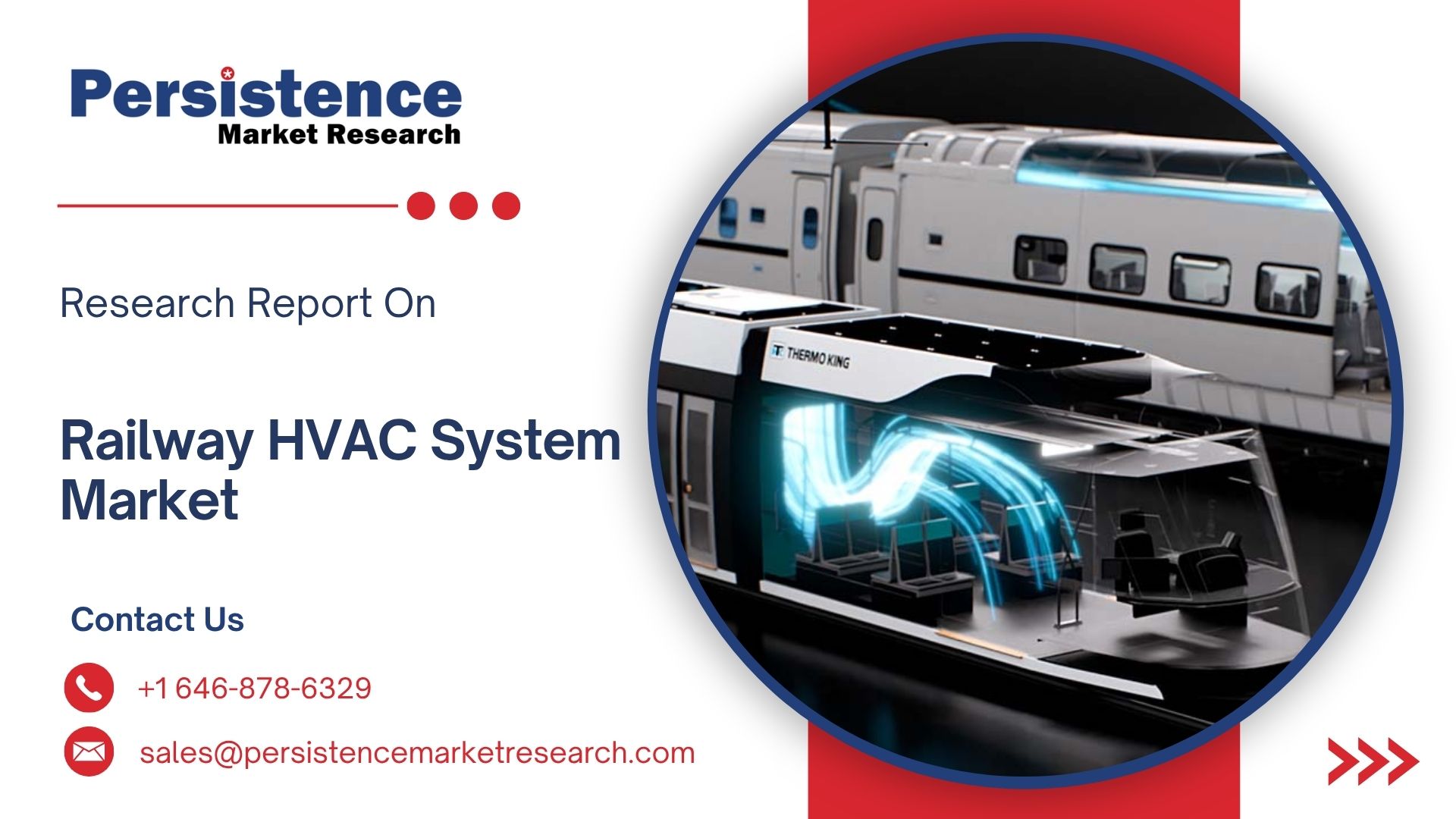
Railway HVAC System Market Size and Trend Analysis
Expansion of Urban Rail Infrastructure and Passenger Comfort Initiatives Strengthens Railway HVAC System Market Outlook Through 2033
BRENTFORD, LONDON, UNITED KINGDOM, March 24, 2026 /EINPresswire.com/ -- The global railway HVAC (Heating, Ventilation, and Air Conditioning) system market is poised for steady growth, driven by rising demand for passenger comfort, energy efficiency, and modernization of rail fleets worldwide. The market is valued at US$ 7.4 billion in 2026 and is projected to reach US$ 10.1 billion by 2033, growing at a compound annual growth rate (CAGR) of 4.5% during the forecast period from 2026 to 2033.
Railway HVAC systems are critical in ensuring passenger comfort, maintaining air quality, and regulating temperature across various train segments. With increasing urbanization, expansion of high-speed rail networks, and growing adoption of metro and light rail transit systems, the demand for advanced HVAC systems is surging. Modern systems not only enhance passenger experience but also focus on reducing energy consumption and complying with environmental regulations.
Factors such as technological innovation, growing investment in rail infrastructure, and a shift toward sustainable and energy-efficient solutions are driving market growth. Additionally, retrofitting older trains with modern HVAC systems and integrating advanced control technologies are emerging as key growth drivers in both developed and developing regions.
Get Free Sample Now: https://www.persistencemarketresearch.com/samples/35309
Key Highlights from the Report
➤ Market Value: The railway HVAC system market is projected to grow from US$ 7.4 billion in 2026 to US$ 10.1 billion by 2033, at a CAGR of 4.5%.
➤ Rising passenger demand for comfort and air quality in rail transport.
➤ Expansion of metro, high-speed, and urban transit networks globally.
➤ Increasing investments in energy-efficient HVAC technologies.
➤ Retrofitting of older rail fleets with modern systems boosting demand.
➤ Technological advancements such as IoT-enabled monitoring and AI-driven energy optimization.
Market Segmentation
By Train Type
• Passenger Train
• Freight Train
By System Type
• Roof-mounted
• Under Floor
• Split
• Others
By Power Source
• AC (Alternating Current)
• DC (Direct Current)
By Region
• North America
• Europe
• East Asia
• South Asia and Oceania
• Latin America
• Middle East and Africa
Regional Insights
Asia-Pacific dominates the railway HVAC system market, driven by rapid expansion of metro, high-speed, and urban transit networks in countries such as China, India, and Japan. Government initiatives promoting rail infrastructure development and passenger comfort are accelerating market growth.
Europe is a key market with high adoption of energy-efficient HVAC technologies, supported by stringent environmental regulations and modernization programs in both passenger and metro fleets. North America is also witnessing growth, driven by urban transit projects and upgrades to existing rail systems.
The Asia-Pacific region is expected to be the fastest-growing market due to large-scale metro expansions, government investments in high-speed rail projects, and rising passenger expectations for comfort and air quality.
Request For Customization: https://www.persistencemarketresearch.com/request-customization/35309
Unique Features and Innovations in the Market
Modern railway HVAC systems are differentiated by features such as energy-efficient compressors, smart ventilation, advanced filtration, and IoT connectivity. These systems ensure optimal temperature and air quality, reduce energy consumption, and support sustainability initiatives.
AI and IoT technologies are playing an increasingly critical role in predictive maintenance, energy management, and real-time monitoring. Sensors track passenger density, temperature, and air quality, allowing dynamic adjustments to HVAC operations. Integration with train control systems enhances operational efficiency and reduces maintenance costs.
Materials and design innovations, such as lightweight aluminum and composite ducting, are improving system efficiency and reducing overall train weight, contributing to lower energy consumption. These innovations are crucial for high-speed and metro trains where space and weight optimization are critical.
Market Highlights
Adoption of railway HVAC systems is primarily driven by passenger comfort requirements, regulatory compliance for air quality, and energy efficiency goals. Operators increasingly prioritize HVAC upgrades to reduce lifecycle costs, improve energy efficiency, and enhance the passenger experience.
Environmental regulations and energy conservation standards are influencing the adoption of modern HVAC systems, encouraging manufacturers to design efficient and eco-friendly solutions. Sustainability initiatives and the push for low-emission transportation systems are further driving market growth.
Cost optimization, reliability, and maintenance efficiency are key considerations, with rail operators seeking solutions that reduce downtime and operational costs while ensuring passenger satisfaction. Advanced HVAC systems also support improved air filtration, which is critical for public health and safety in urban transit networks.
Key Players and Competitive Landscape
The global railway HVAC system market is competitive, with several leading players focusing on innovation, partnerships, and expansion. Key companies include:
✦ Daikin Industries, Ltd. – Known for energy-efficient HVAC solutions and advanced train climate control systems.
✦ Trane Technologies plc – Specializes in innovative railway HVAC systems with integrated controls and energy optimization.
✦ Mitsubishi Electric Corporation – Offers technologically advanced HVAC solutions for high-speed and metro trains.
✦ Carrier Global Corporation – Provides sustainable and energy-efficient railway HVAC systems worldwide.
✦ Hitachi, Ltd. – Develops reliable HVAC solutions integrated with train operational technologies.
✦ LG Electronics Inc. – Focuses on compact, energy-saving HVAC solutions for urban transit applications.
These companies are investing in R&D to introduce energy-efficient, lightweight, and digitally controlled HVAC systems. Strategic collaborations, global expansions, and aftermarket services are key strategies to strengthen market presence.
Buy Now: https://www.persistencemarketresearch.com/checkout/35309
Recent Developments
• Launch of AI-enabled railway HVAC systems for real-time energy optimization and predictive maintenance.
• Expansion of metro and high-speed train HVAC solutions in Asia-Pacific to support rapid urbanization and transit network growth.
Future Opportunities and Growth Prospects
The railway HVAC system market presents significant growth opportunities, particularly in high-speed rail, metro, and urban transit sectors. Increasing government investments in rail infrastructure and passenger comfort improvements will drive demand for advanced HVAC systems.
Integration of AI, IoT, and smart control technologies will continue to enhance system efficiency, reliability, and maintenance capabilities. Energy-efficient designs and sustainable solutions will be critical in meeting regulatory requirements and supporting eco-friendly rail transportation initiatives.
In conclusion, the global railway HVAC system market is set for sustained growth, driven by expanding rail networks, technological innovations, and increasing passenger expectations for comfort and energy efficiency. Companies that focus on innovation, sustainability, and smart technologies are poised to capitalize on emerging opportunities in this dynamic market.
Persistence Market Research
Persistence Market Research Pvt Ltd
+1 646-878-6329
email us here
Visit us on social media:
LinkedIn
Instagram
Facebook
YouTube
X
Legal Disclaimer:
EIN Presswire provides this news content "as is" without warranty of any kind. We do not accept any responsibility or liability for the accuracy, content, images, videos, licenses, completeness, legality, or reliability of the information contained in this article. If you have any complaints or copyright issues related to this article, kindly contact the author above.
