

Apricot Market Expected to Reach USD 26.58 Billion by 2035, Driven by Organic Fruit Demand and Health Trends
Apricot Market
Apricot Market growth is driven by rising organic demand, sustainable farming practices, expanding food applications, and consumer preference for healthy fruit.
Growing demand for natural, nutritious, and sustainable food choices is creating new opportunities for the global apricot industry.”
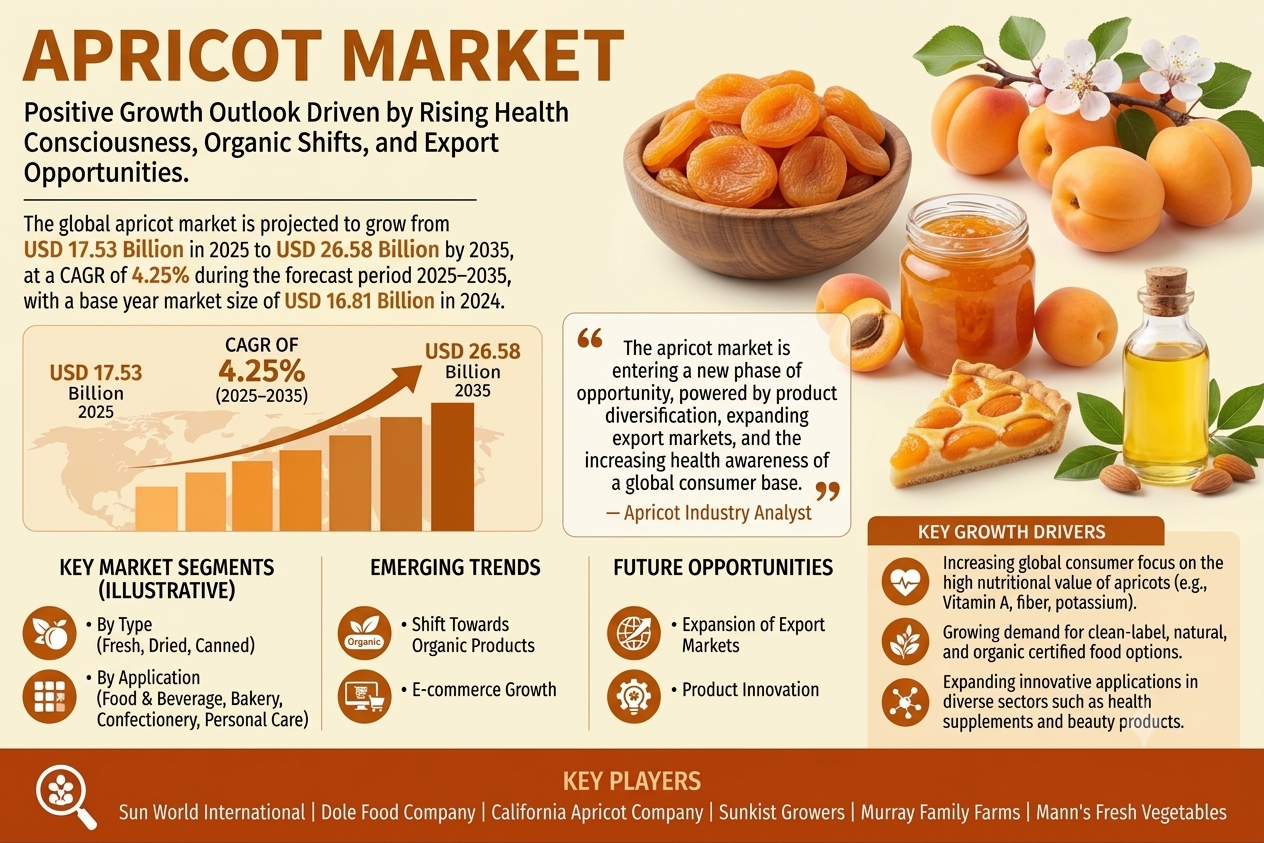
NEW YORK, NY, UNITED STATES, July 23, 2026 /EINPresswire.com/ -- The global Apricot Market Size is witnessing consistent growth as consumer preferences shift toward nutritious fruits, organic food products, and naturally sourced ingredients. According to Market Research Future analysis, the Apricot Market Size was valued at USD 16.81 Billion in 2024 and is expected to increase from USD 17.53 Billion in 2025 to USD 26.58 Billion by 2035, registering a compound annual growth rate (CAGR) of 4.25% during the forecast period from 2025 to 2035. The market growth is primarily influenced by rising awareness about healthy eating habits, increasing consumption of fresh and dried fruits, growing adoption of organic farming methods, and expanding applications of apricots across food, beverage, and wellness industries. The historical analysis period from 2019 to 2024 highlights the gradual evolution of consumer demand, improved agricultural practices, and stronger distribution networks that have created a favorable environment for long-term market expansion.— Market Research Future (MRFR)
The global apricot market represents a significant segment within the broader fruit and agricultural industry, driven by increasing consumption of fresh fruits and expanding applications of apricots across various food categories. Known for their appealing taste, nutritional benefits, and versatility, apricots are widely consumed fresh and processed into products such as dried fruits, jams, preserves, juices, bakery fillings, snacks, and nutraceutical formulations. Rising consumer preference for naturally sourced and nutrient-rich food products has further supported market demand, as health-conscious consumers increasingly seek clean-label and sustainable food options. The market is also benefiting from advancements in agricultural practices, improved cultivation techniques, efficient supply chain systems, and growing investments in fruit production to enhance quality and productivity.
Key Market Growth Factors:
Rising Demand for Organic Apricots and Sustainable Farming Practices
One of the primary factors supporting the growth of the apricot market is the increasing demand for organically cultivated fruits. Consumers worldwide are becoming more aware of the environmental impact of agricultural practices and are showing greater interest in chemical-free, naturally grown food products. Organic apricots are gaining attention due to their perceived health advantages and alignment with sustainable food consumption patterns.
Farmers are increasingly adopting organic farming methods, including natural soil management techniques, reduced chemical usage, and environmentally responsible cultivation practices. These approaches are helping producers meet the rising demand for premium-quality fruits while supporting long-term agricultural sustainability.
Retailers and food manufacturers are also expanding their organic fruit portfolios to address changing consumer expectations. The availability of certified organic apricot products through supermarkets, specialty stores, and online marketplaces is creating new opportunities for market participants.
Increasing Health Awareness Among Consumers:
Growing awareness about preventive healthcare and nutrition is positively influencing fruit consumption patterns. Apricots are considered a nutrient-rich fruit containing essential vitamins, minerals, fiber, and antioxidants that support overall wellness. This nutritional profile has increased their appeal among consumers focused on maintaining healthier diets.
The rising popularity of functional foods has also contributed to demand growth. Food manufacturers are incorporating apricot-based ingredients into products positioned around wellness, natural nutrition, and balanced lifestyles. Apricot extracts, dried fruit components, and fruit-based formulations are increasingly used in health-oriented products.
The shift toward healthier snacking habits is another important factor supporting market expansion. Many consumers are replacing conventional snacks with dried fruits and natural fruit products, creating additional opportunities for apricot producers and processors.
Market Trends Influencing Apricot Industry Development:
Growing Popularity of Dried Apricot Products
Dried apricots have become one of the most prominent product categories within the apricot industry. Their longer shelf life, convenience, and nutritional value make them attractive to consumers and businesses alike. Dried apricots are widely used as standalone snacks and as ingredients in cereals, energy bars, bakery products, confectionery items, and trail mixes.
The increasing demand for convenient food options has encouraged manufacturers to introduce innovative dried apricot products with different flavors, packaging formats, and nutritional enhancements. Premium dried fruit products are gaining popularity among consumers seeking healthier alternatives for on-the-go consumption.
Additionally, dried apricots have strong demand in international markets due to their ease of transportation and storage advantages. This has encouraged producers to expand processing capabilities and improve export opportunities.
Expansion of Online Distribution Channels:
Digital transformation within the food retail sector is creating new growth opportunities for apricot suppliers. Online grocery platforms and e-commerce channels have improved consumer access to fresh and processed apricot products. Customers can now purchase a wide range of fruit products from domestic and international suppliers with greater convenience.
Online platforms are also helping smaller producers reach broader consumer groups without depending entirely on traditional retail networks. The availability of product information, customer reviews, and subscription-based purchasing options is influencing buying decisions and strengthening digital sales channels.
As online food shopping continues to expand, companies operating in the apricot market are investing in digital marketing strategies, improved packaging solutions, and efficient delivery systems to enhance customer engagement.
Get Full PDF Sample Copy of Report: (Including Full TOC, List of Tables & Figures, Chart) @
https://www.marketresearchfuture.com/sample_request/23066
Apricot Market Opportunities:
Increasing Applications in Food and Beverage Industries
The growing use of apricot-based ingredients across food and beverage applications presents significant opportunities for market participants. Apricot flavors, concentrates, purees, and extracts are increasingly used in beverages, dairy products, bakery items, confectionery products, and desserts.
Food manufacturers are exploring fruit-based formulations to introduce healthier and more natural product offerings. Apricots provide attractive flavor profiles and nutritional advantages, making them suitable for product innovation.
The demand for clean-label foods is encouraging companies to replace artificial flavors and additives with natural fruit ingredients. This trend is expected to create additional opportunities for apricot suppliers and processors.
Apricot Market Trends and Industry Developments:
Increasing Popularity of Dried Apricot Products
The growing demand for convenient and nutritious snack options is significantly influencing the development of the apricot market. Dried apricots have become increasingly popular among consumers due to their extended shelf life, portability, and nutritional value. Unlike fresh fruits that require controlled storage conditions, dried apricots offer convenience for consumers and businesses while maintaining essential nutrients.
The rising preference for healthy snacking alternatives has encouraged manufacturers to expand their dried fruit product portfolios. Dried apricots are increasingly used in breakfast cereals, energy bars, trail mixes, bakery products, confectionery items, and premium snack categories. This diversification of applications is helping companies create new revenue opportunities within the global apricot industry.
The premiumization trend is also influencing the dried apricot segment. Consumers are willing to spend more on high-quality products with organic certifications, natural processing methods, and sustainable packaging. As a result, producers are focusing on improving processing techniques and developing innovative product offerings to meet evolving consumer expectations.
Growing Adoption of Sustainable Agricultural Practices:
Sustainability has become an important trend shaping the future direction of the apricot industry. Climate awareness, environmental concerns, and changing consumer expectations are encouraging farmers and companies to adopt responsible agricultural methods.
Sustainable apricot cultivation focuses on improving soil health, reducing excessive chemical usage, conserving water resources, and maintaining biodiversity. These practices not only support environmental protection but also help producers meet the increasing demand for ethically sourced food products.
Many market participants are investing in sustainable supply chains to improve transparency and build stronger relationships with environmentally conscious consumers. This trend is expected to play an important role in the future development of the market as sustainability becomes a key factor influencing purchasing decisions.
Expansion of E-Commerce and Digital Food Retail Channels:
The rapid growth of online grocery platforms has created new opportunities for apricot suppliers and retailers. Digital distribution channels have improved product accessibility by allowing consumers to purchase fresh and processed apricot products from a wider range of suppliers.
Online platforms provide manufacturers with opportunities to showcase product quality, certifications, nutritional information, and sustainability initiatives directly to customers. This increased visibility is helping smaller producers compete in broader markets.
The adoption of e-commerce is particularly beneficial for premium and organic apricot products, as consumers searching for specialized food items can easily discover and purchase them online. As digital grocery shopping continues to expand globally, online channels are expected to become an increasingly important component of the apricot supply chain.
Apricot Market Segmentation Analysis:
The global Apricot Market is segmented based on product type, cultivation method, distribution channel, end use, and region. These segments provide insights into consumer trends, production patterns, and emerging opportunities.
▪️By Product Type:
The market includes fresh apricots, dried apricots, and processed apricot products. Fresh apricots remain popular due to their nutritional benefits, while dried apricots are gaining demand because of their convenience and use in healthy snacks. Processed products such as jams, purees, and beverages are also contributing to market growth.
▪️By Cultivation Method:
The market is divided into conventional and organic cultivation. Conventional farming holds a significant share due to established production practices, while organic cultivation is growing with increasing consumer preference for sustainable and chemical-free food products.
▪️By Distribution Channel:
Apricot products are distributed through supermarkets, specialty stores, online platforms, and other retail channels. While traditional stores maintain strong consumer reach, online platforms are expanding due to convenience and increasing digital shopping adoption.
▪️By End Use:
The market serves household consumption, food processing, beverages, bakery, and confectionery industries. Rising demand for natural fruit ingredients is supporting the adoption of apricot-based products across various commercial applications.
Regional Analysis of Apricot Market:
The global Apricot Market covers North America, Europe, Asia-Pacific, South America, and the Middle East & Africa. North America is witnessing steady growth due to increasing demand for organic fruits, clean-label products, and nutritious snacks, supported by advanced agricultural practices and strong retail networks. Europe is also experiencing rising demand for sustainably sourced and premium apricot products as consumers focus on healthier lifestyles, organic farming, and environmentally responsible food choices.
Asia-Pacific is expected to become a significant growth region due to rising population, increasing disposable income, changing dietary preferences, and growing awareness of nutritional foods. Expanding e-commerce platforms, improved supply chains, and investments in food processing are supporting market expansion. South America and the Middle East & Africa are emerging markets, driven by urbanization, improving distribution networks, and increasing interest in healthy food products. Growing agricultural development and international trade opportunities are expected to further strengthen the adoption of apricot products across these regions.
Competitive Landscape of Apricot Market:
The global Apricot Market is characterized by the presence of established fruit producers, agricultural companies, processors, and distributors focusing on improving product quality, expanding supply networks, and meeting changing consumer preferences. Companies operating in the market are increasingly emphasizing sustainable cultivation, organic product development, advanced processing methods, and strategic distribution partnerships to strengthen their market position.
Market participants are focusing on innovation across product categories, including fresh apricots, dried fruit products, processed ingredients, and premium organic offerings. The rising demand for healthier food choices has encouraged companies to invest in research and development activities aimed at improving product quality, extending shelf life, and introducing new product formats.
Strategic collaborations between growers, retailers, and food manufacturers are becoming increasingly important in ensuring efficient supply chain operations. Companies are also adopting advanced packaging solutions to maintain freshness, improve transportation efficiency, and enhance consumer appeal.
The key companies profiled in the Apricot Market include:
▪️Sun World International
▪️Dole Food Company
▪️California Apricot Company
▪️Sunkist Growers
▪️Murray Family Farms
▪️Mann's Fresh Vegetables
▪️Mackintosh Fruit Farm
▪️Morrisons
These companies are actively working toward expanding production capabilities, improving product availability, and responding to increasing consumer demand for sustainable and nutritious fruit products.
Key Challenges Affecting Apricot Market Growth:
Although the Apricot Market is projected to reach USD 26.58 Billion by 2035, several challenges may impact its growth, including climate risks, agricultural dependency, supply chain limitations, and production variability. Apricot cultivation relies heavily on favorable weather conditions, and changing temperature patterns, unpredictable rainfall, water shortages, and extreme climatic events can affect crop yield and fruit quality. To overcome these challenges, farmers are increasingly adopting climate-resilient farming practices, advanced irrigation systems, and sustainable cultivation methods to maintain consistent production.
Another major challenge is related to supply chain management and price fluctuations. Fresh apricots require careful handling, efficient transportation, and proper storage due to their perishable nature. Limited cold-chain infrastructure in some regions can lead to post-harvest losses and affect product availability. Additionally, variations in seasonal production, labor costs, weather conditions, and transportation expenses can create price instability for producers and consumers. Improving logistics networks, expanding storage facilities, adopting advanced packaging solutions, and implementing better production planning strategies will be essential for reducing these challenges. Market participants are also focusing on supply chain optimization and stronger agricultural practices to ensure stable operations and support long-term growth in the apricot industry.
Future Outlook of Apricot Market:
The global Apricot Market is expected to maintain steady growth during the forecast period of 2025–2035, expanding from USD 17.53 Billion in 2025 to USD 26.58 Billion by 2035 at a CAGR of 4.25%. Future market development will be driven by increasing consumer demand for healthy foods, rising preference for organic fruits, and growing applications of apricots in food and beverage industries. The demand for natural, fruit-based ingredients is expected to create new opportunities as manufacturers focus on clean-label products that offer nutritional benefits and appealing flavors.
Sustainability, technological advancements, and digital retail expansion will play an important role in shaping the future of the apricot industry. Investments in organic farming, sustainable packaging, precision agriculture, and improved food processing technologies are expected to enhance productivity and product quality. Additionally, the growth of online grocery platforms will improve market accessibility by connecting producers with wider consumer bases. As consumers continue to prioritize nutrition, sustainability, and naturally sourced products, the Apricot Market is expected to experience consistent development. Increasing investments in cultivation practices, supply chain improvements, and innovative product development will further support long-term industry growth through the forecast period.
Frequently Asked Questions (FAQs)?
1. What is the projected size of the Apricot Market by 2035?
According to Market Research Future analysis, the global Apricot Market is expected to reach USD 26.58 Billion by 2035, growing from USD 17.53 Billion in 2025 during the forecast period.
2. What factors are driving the growth of the Apricot Market?
The major factors supporting market growth include increasing demand for organic fruits, rising health awareness, growing consumption of dried fruit products, expansion of food processing applications, and adoption of sustainable farming practices.
3. Which regions are covered in the Apricot Market analysis?
The market analysis covers major regions including North America, Europe, Asia-Pacific, South America, and the Middle East & Africa, highlighting regional consumption patterns, production trends, and growth opportunities.
4. What are the major applications of apricot products?
Apricots are widely used in fresh fruit consumption, dried fruit snacks, beverages, jams, preserves, bakery products, confectionery items, dairy applications, and functional food products.
Discover Related Research Reports By Market Research Future:
Lychee Market:
https://www.marketresearchfuture.com/reports/lychee-market-25137
Dried Apricots Market:
https://www.marketresearchfuture.com/reports/dried-apricots-market-31937
Fresh Fruits Market:
https://www.marketresearchfuture.com/reports/fresh-fruits-market-22406
Apricot Oil Market:
https://www.marketresearchfuture.com/reports/apricot-oil-market-27010
Sagar Kadam
Market Research Future
+ +1 628-258-0071
email us here
Legal Disclaimer:
EIN Presswire provides this news content "as is" without warranty of any kind. We do not accept any responsibility or liability for the accuracy, content, images, videos, licenses, completeness, legality, or reliability of the information contained in this article. If you have any complaints or copyright issues related to this article, kindly contact the author above.
